Article · 2026-05-26
IK Sirius and "selling the gold": short-termism in Swedish football
IK Sirius is being accused of "selling the gold" if they sell anyone this summer. Six months ago nobody would have expected anyone to use those words.
Swedish football revenue is growing faster than any other league in Europe right now, driven largely by transfer income. Many clubs are using the moment to become less volatile by identifying their actual strengths and weaknesses and building strategies they can hold to over time.
But the conversation around these clubs keeps landing on the same problem: short-termism.
Three examples from the current Allsvenskan discourse.
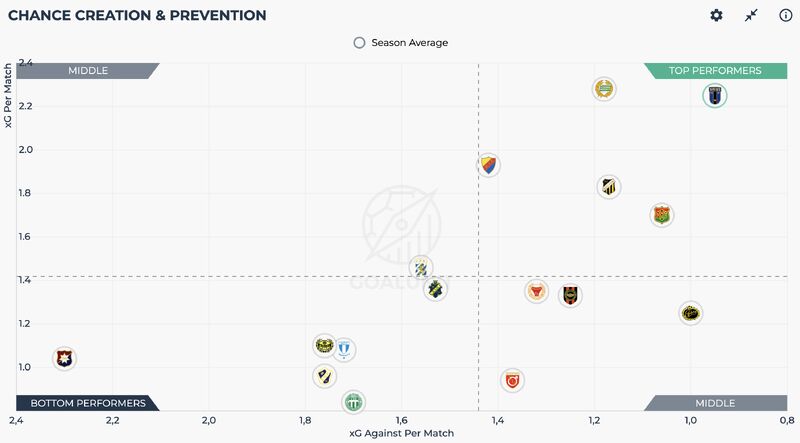
Hammarby, who across the full season have been one of the league's best-performing teams, are facing skepticism about the club strategy and the coach Kalle Karlsson. This is despite the last two years being arguably the best in the club's history results wise, with 1.97 PPG over 60 league games, overperforming their financial size heavily. The start of the 2026 season continues the trend with a current second position in the table, and the strongest underlying metrics in the league.
In Malmö, where things have not gone to plan, the discussion has turned to a perceived need for long-term thinking.
And at IK Sirius, who currently lead the table, the debate is whether selling players this summer (entirely consistent with their stated long-term strategy) would amount to "selling the gold."
Worth noting on that last point: Mjällby AIF sold Nichlas Røjkjær last summer, which many said would lose them the title. IK Sirius sold Leo Walta this winter, arguably the most valuable player last season.
This says something about how complex the daily reality is for the people running football clubs. If a club is results focused like MFF has been for years, the moment results dip, the absence of long-term thinking becomes the problem. If a club is long-term performance oriented like Hammarby, perceived lack of fighting spirit and result focus becomes the problem. If a club leads the table with results that outpace what the underlying performance can sustain, like Sirius, the club is apparently already selling the gold.
A useful number on that last one. Sirius has produced 2.78 ppg this spring against expected points of 1.96. Regardless of whether they sell players this summer, that gap is likely going to close. The drop in points this autumn is largely independent of the transfer window.
Two of these clubs have recently held to their long-term plan through rocky stretches, Hammarby through Kim Hellberg's difficult spring of 2024 and IK Sirius through an equally difficult spring of 2025, now sit first and second in Allsvenskan.
The one thing we know with certainty is that football clubs will lose matches from time to time. How club representatives, media, and pundits, respond to those losses will shape how much our clubs win over time.